Sunday, June 30, 2013

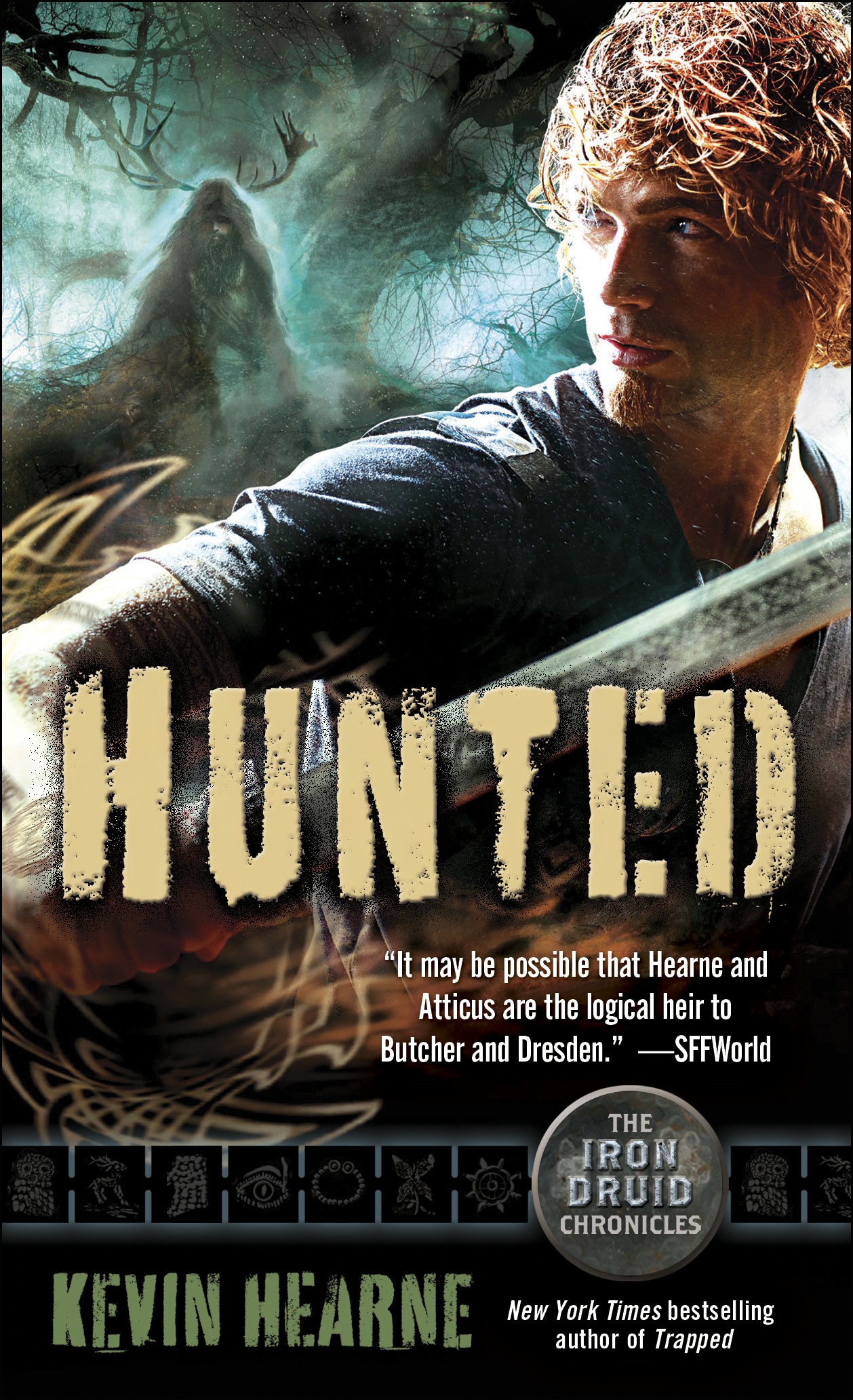
Hunted, book 6 of Kevin Hearne's Iron Druid Chronicles


Hunted, Book 6 
of Kevin Hearne's Iron Druid Chronicles, 
Falls Short of the Series' Standards 
(But Still Rocks)

          The Iron Druid Chronicles is an urban fantasy series by Kevin Hearne featuring Atticus O’Sullivan, a 2,100 year old Irish Druid who has outlived the influence of the Irish pantheon, the Tuatha de Danann. At the end of Trapped, the fifth book in the series, Atticus had finally managed to bind his apprentice, Granuaile MacTiernan, to the Earth, thus earning her the status of Druid... but not before massively pissing off the Olympians first. 
          Hunted: It seems like everyone in the world, and even the gods from several different planes of existence, are out for the two Druids’ blood. Hel and Loki want the Druids out of the way before they begin Ragnarok. Artemis and Diana want revenge on Atticus for taking Bacchus and several dryads hostage. The vampires want the Druids dead because of the unique power they have to unbind vampires into particulate goo. Odin and the Norse pantheon want Atticus’s help to fight Ragnarok, but they would be just as satisfied to sit back and watch him get taken out for previously killing Thor. And worst of all, the Druids are also being targeted by an unknown entity from within the Tuatha de Danann! 
          The majority of this book’s plot revolves around the flight of Granuaile, Atticus, and Oberon across Europe as they flee the assorted forces seeking their demise. The Druids are prevented from shifting planes by Pan and Faunus’s intervention, so they must flee across the European continent to seek aid. The flight scenes in Hunted can get a little bit tedious and repetitive, but the battle scenes more than make up for it. The fight scenes are quick and well written, with amusing cameos from gods and monsters from several different mythologies.
          One of the things that have made the Iron Druid Chronicles so addictive up until this point has been how funny the books are. Each book is inundated with jokes, topical cultural references, and awesome turns of phrase. Occasionally jokes have fallen flat in past books, but while reading Hunted, I was shocked with just how contrived the humor in this book was compared to the past five books.  Frankly, the majority of the humor in this book just was not up to the high standard Hearne has set for this series, which is really disappointing.
          While Hearne has successfully used a bizarre mixture of words to express unique feelings in a comical way in the past (an example of this is Hearne’s concept of being riddled by “guilt ferrets”, the sensation of feeling so guilty that it seems like ferrets are crawling all over your body), the author has some notable failed turns of phrase in Hunted. Hearne has even earned the dubious honor of committing one of the worst linguistic transgressions I have come across: “cockfident waffle dolphin”. Yeah, you read that right. This stupid portmanteau-nonsense-garble… there isn’t even an explanation for what Hearne could have been thinking when he wrote this phrase. 
          There are many moments when Hearne returns to form, though, such as with his portrayal of the Greek god of lightning, Zeus. I won’t spoil anything about the Zeus scenes, except for the fact that they’re hilarious. Too bad there isn’t more of him! Equally funny are the dialogue scenes between Atticus and his wisecracking hound, Oberon. As per usual, Oberon steals every scene he’s in. Despite the series’ humorous nature, Hunted is a much darker book than any of the previous novels, so be prepared for a few sad moments.
          Hunted also suffers from a few structural issues; after the main plot is resolved, Atticus goes on a solo adventure that, while one of the most interesting and best-written sections of the book, feels very disconnected from the novel as a whole. Even after this point, the story malingers while the author tries to set up a transition to the next novel. This set-up is clunky at best and lazy writing at worst, although I must say that the ending comes with a great cliffhanger!
Bonus features:
          Hunted has a handy pronunciation guide for all of the tricky names for readers who want to know the “correct” pronunciation. This was especially important because the main character Atticus has a traditional Irish name, Siodhachan, that I would have no idea how to pronounce without the guide (it’s SHE yah han).
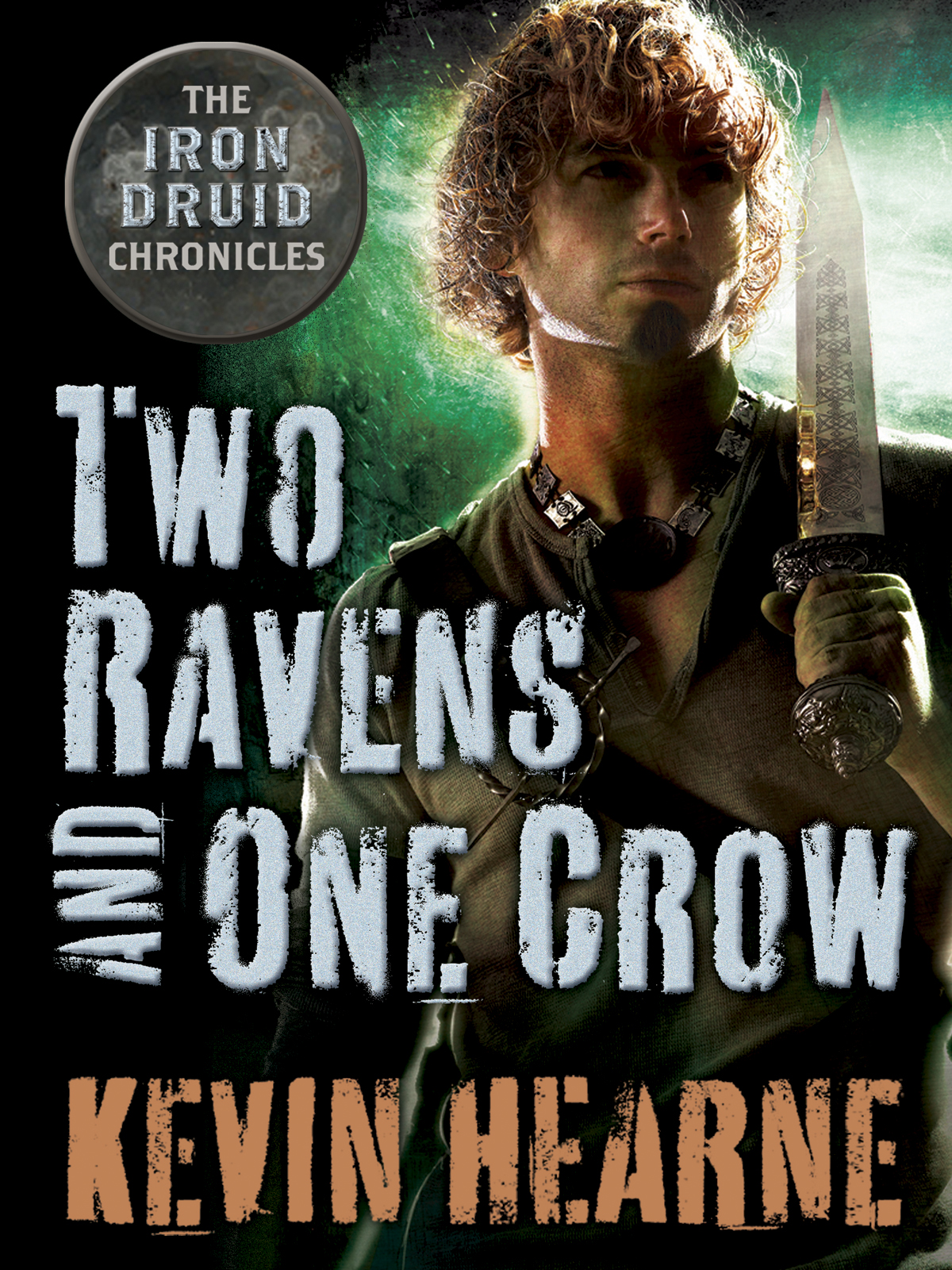
          Another bonus feature of Hunted is the addition of the short story, “Two Ravens and One Crow”, at the end of the book. This short story is considered book 4.5, and shares important details of what happens between books four and five, Tricked and Trapped.
          So would I recommend Hunted? Yes. While Hunted is not Kevin Hearne’s best work, the book still has its great moments, and surprisingly, a lot of these moments come when Atticus and the team are at their lowest. It seems only natural that this book would delve into the darker aspects of the characters’ psyche; after encountering some serious setbacks and traumatic events, the book wouldn’t have had as much of an impact if it employed all levity all the time.
          I’m definitely excited for the next book in the series, Shattered, especially to see how two revelations at the end of the book pan out!

Saturday, June 8, 2013

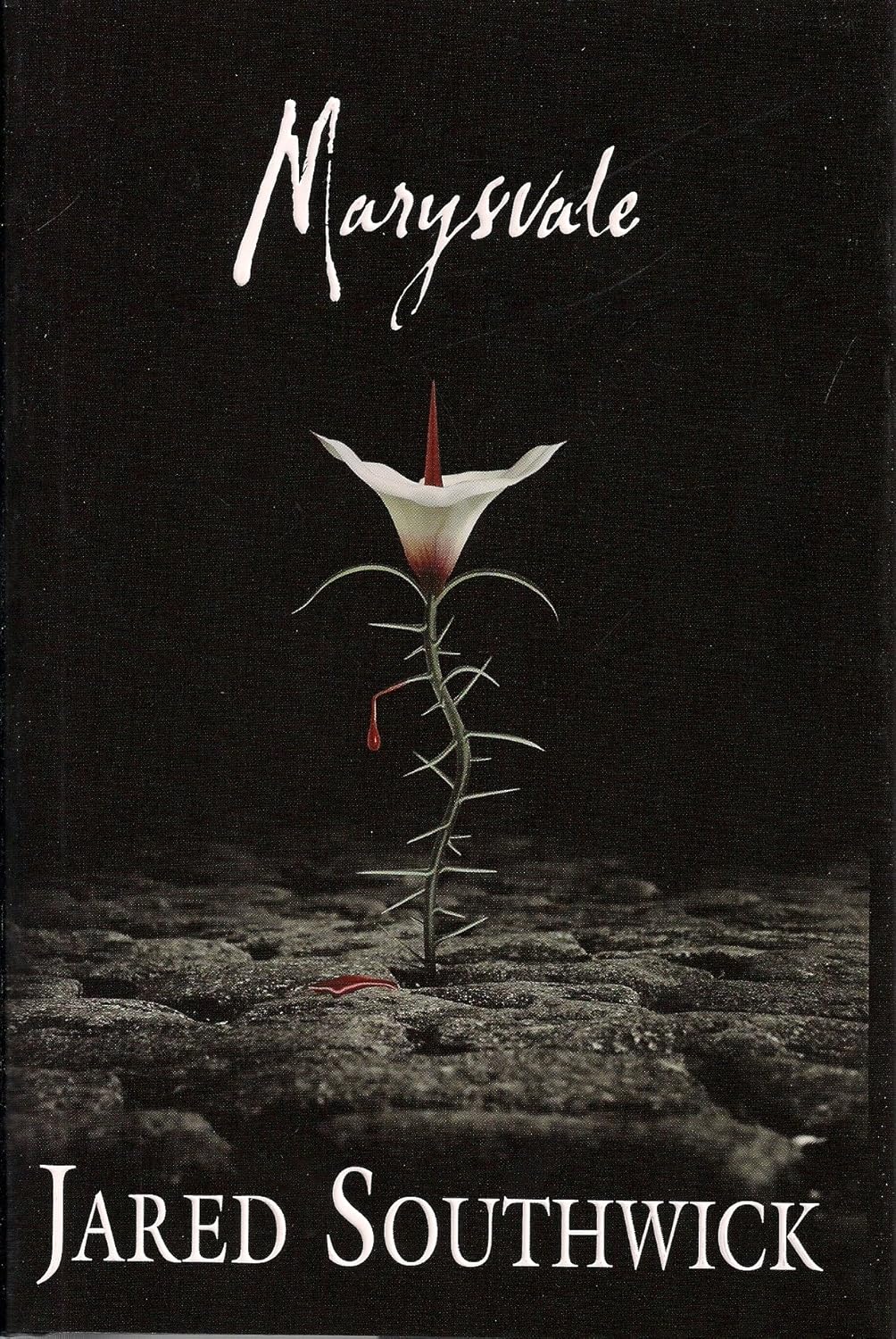
The Marysvale Trilogy by Jared Southwick (Marysvale, Alyth, and Anam)


        The Marysvale Trilogy consists of three books, Marysvale, Alyth, and Anam, and follows John Casey, a young man with a secret: in a world where people who are different are ostracized and even persecuted, John has the supernatural ability to read souls. John can easily tell what emotions the people around him are feeling, as well as being able to read their thoughts with a bit of effort. After John angers the town’s magistrate, a man with complete influence over the townspeople, he is accused of witchcraft and pursued by a torch-carrying mob. John’s only choice if he is to survive is to flee the village of Syre, but he escapes one bad situation just to fall into another, for after he escapes mob’s clutches, John discovers that he is being chased by a far more terrifying foe: a seven foot tall, ape-like creature with a gaping vortex where its soul should be.
        John escapes the creature’s clutches when he stumbles upon the only sign of human civilization in miles, a farm occupied by a lone woman and her dog. He soon finds out that those who enter the territory of nearby fortress Marysvale never leave. Those who try to escape the territory are mauled by the vicious monsters and are never seen again… those who get out of the fortress of Marysvale first, that is. This is because the people of Marysvale have sacrificed everything in the name of security: their labor, their weapons, and even a large tithe of their food are sacrificed to the aristocratic governor of Marysvale. More than that, the people of Marysvale have sacrificed their freedom, and the powers-that-be like things the way they are.
        Enter John Casey, a free-thinking, rebellious young man who is used to playing by his own rules.

Things I didn’t like about The Marysvale Trilogy:
  • The Marysvale Trilogy is littered with typos (“immerge” for “emerge”) and malapropisms (“bazaar” in place of “bizarre”). I’ve noticed that extremely poor editing is a pattern among ebooks (at least Kindle’s). What gives? 
  • The plot, at times, can become a little predictable. As someone who reads a LOT of fantasy books, I am sometimes able to guess what will happen, but with these books it was easier than usual because...
  • These books can at times get a bit repetitive. Obviously John’s supernatural powers are going to get him into a lot of trouble with the superstitious and conservative villagers he encounters, but after several episodes in which John is accused of witchcraft, with all of the ensuing repercussions, this aspect of the story line becomes a bit stale. The trilogy really picks up steam, however, when shit hits the fan and John is left in charge of a group of refugees, the majority of which believe he is a devil who possesses the people who support him. From this point on predictability was not an issue for me; I was pleasantly surprised by some of the ensuing plot twists.
Things that I liked about The Marysvale Trilogy:
  • The first one is FREE on Kindle! Yes, you read that correctly. Marysvale is 100% free on the Kindle and you can download it here. I actually discovered this series because I am on the mailing list of the website ebookfling, which has a system that enables people with lendable ebooks to “fling” them anonymously to other users in exchange for a credit towards downloading any of the lendable ebooks listed on the site. ebookfling also has a regular email to inform members of “weekly steals” on Amazon, which are book promotions where the Kindle version of a book is available for download for FREE! This is actually how I discovered the first book in The Hunger Games series.
  • The Plot: The author, Jared Southwick, is not afraid to go dark. The Marysvale Trilogy has many violent scenes, although they are never unnecessarily graphic. These books also show some of the uglier sides of humanity—man’s blind hatred and fear of the unknown, disloyalty and betrayal, cronyism and nepotism, and the pursuit of power at all costs. Some of the trilogy’s themes have resonance in today’s world: government overreach, intolerance, and the dilemma concerning the boundaries between security and freedom. The Marysvale Trilogy manages to be relevant to today’s world without coming off as political or overly preachy. 
  • The Characters: John, the main character, is not a perfect guy. John is angry (justifiably so) and sometimes broody, but is committed to helping even the people who fear and loathe him for his unnatural powers. In fact, his short temper frequently exacerbates already tense situations, but in my opinion, this is a good thing because he has a strong personality; John is actually a breath of fresh air when contrasted with his dull love-interest, Jane, whose character does not really add much to the story (fortunately, the romance in this series is incidental and Jane does not have a huge role). Jane’s little sister, Hannah, however, is probably the book’s strongest character. Hannah, a kickass sharpshooter who wants to become a general in a world in which women have few rights and even less respect, provides the book’s comic relief. Most of the book’s funniest moments come from Hannah’s policing of John and Jane’s developing relationship. Hannah has a capital-a Attitude and knows how to employ it to good use. It is worth noting that all of the series’ important female characters are strong, admirable women (even Jane).
  • The Final Showdown! I won’t give anything away, but the resolution of the trilogy is suspenseful and at times surprising.
        So would I recommend The Marysvale Trilogy? Yes. Although these books have not placed Jared Southwick on my “favorite authors list”, all three of the Marysvale books were thoughtful and entertaining. These books are a mix of mind-magic, monsters, western-style sharpshooting, politics and the fight against oppression, and feature a strong protagonist and even stronger supporting female characters. Plus, if you have a Kindle, the first one is free, so what do you have to lose? Check it out.

Tuesday, June 4, 2013

A Spell for Chameleon by Piers Anthony: a Fantasy Classic that Has Not Aged Well

         A Spell for Chameleon was Piers Anthony’s first book in his extensive Xanth series, which consists of 27 books. The Xanth series is considered a classic in the fantasy genre.
          A Spell for Chameleon takes place in the magical world of Xanth, a land inhabited by humans, sentient creatures, monsters, and a vast variety of magical plants. This story follows the protagonist, 25-year-old Bink, who must discover a magical talent if he is to remain in Xanth. This is because in the magical land of Xanth, exhibiting a magical talent by the age of 25 is the one and only prerequisite for citizenship, and for Bink, time is running short! 
All throughout his life, Bink has been bullied and teased for being a “spell-less wonder”, a freak who cannot perform magic in a society where every citizen has one magical talent, ranging anywhere from Magician-level magic such as storm-summoning to “spot on the wall” magic, which is the term for useless magical talents such as projecting a colorful spot on the wall. If Bink cannot demonstrate his talent soon, he will be exiled to Mundania, a land where there is no magic at all.
          The first half of the book is dedicated to Bink’s quest to discover his talent. Bink journeys through the dangerous wilderness to seek the Good Magician Humphrey, whose magical talent lies in ascertaining the truth. Bink is willing to pay the Good Magician’s exorbitant fee, one year of indentured service, to learn the answer to his question, but even the talented Humphrey is unable to indentify what Bink’s talent is, other than to affirm that he does have one. When the time comes to prove to Xanth’s King that he has what it takes to be a citizen, the senile King, who can barely summon a dust devil, much less the awesome storms of his youth, refuses to accommodate Bink’s inability to perform out of jealousy of the Good Magician Humphrey’s power, leading to Bink’s exile. This is when the real story starts.
          After he passes the killing border between Xanth and Mundania, Bink is captured by the Evil Magician Trent, a figure he has only heard about in childhood stories. Trent, a powerful magician with the power to transform any living being into whatever he chooses, was banished from Xanth 20 years ago when he tried to violently usurp the throne. Trent still harbors designs on the throne, and he plans to use Bink’s knowledge to bypass the magical border in order to enter Xanth with his Mundane army.
          A Spell for Chameleon focuses on the challenges Bink faces: making the hard choice between personal gain/happiness and remaining loyal to the country that exiled him, determining the nature of his magical talent, and discovering what it truly is that he wants in a woman.
What I liked about this book:
          Inventiveness: The best parts of these books focus on the magical land of Xanth and the myriad dangers of its ecosystem. The creatures that make up Xanth are what make it so special. At times heavily reminiscent of Alice in Wonderland, the plants and animals of Xanth are bizarre, magical, and prone to playing tricks on the unwary. A Spell for Chameleon places a heavy emphasis on applying normal (read: real world) evolutionary theory to the magical creatures and ecosystem of Xanth, and the book explores the repercussions of reproductive isolation that was caused when Xanth was cut off from Mundania 100 years prior. The plants of Xanth frequently possess spells of their own that aid in their survival. For example, there are trees that have spells that divert the attention of passerby so that they will not be harmed by loggers. There are carnivorous trees that cast sleep spells on any creature that gets too close… and you can imagine what happens to them once they fall asleep! There are paths that magically disappear, forests that herd people in the direction of their choosing, and a myriad of helpful plants such as trees that grow bread, blankets, beer, and other items useful for travelers. 
          The characters: the juxtaposition between the selfish, profiteering, crotchety, but ultimately harmless (and thus “good”) Good Magician Humphrey and the frequently noble, heroic, and powerful (and thus “evil”) Evil Magician Trent was amusing because the reality of the two Magicians’ natures are at odds with the public’s perception of the two figures. Sure, the Evil Magician Trent is a criminal who has abused his magical talent in the pursuit of power, but is he really so bad when compared with the Good Magician Humphrey who casually demands a year’s worth of hard labor from every person who comes to him seeking knowledge? The evolution that takes place in the character of the Evil Magician Trent is a treat to behold.

          The plot: A Spell for Chameleon is an absolutely original story. The people, the magic system, the flora and fauna that make up Xanth’s ecosystem, and the plot are all unique and interesting. The story is fast paced, witty, frequently funny, and sometimes intelligent (hey, not all books can be deep and poignant all the time).

          But before you get too excited about A Spell for Chameleon, know that it has some major flaws!
What I didn’t like about this book:
          Oh my god. The RAMPANT misogyny and sexism: personally, although I really enjoyed the plot of this book and the magical world it is set in, I was very put off by the casual, persistent objectification and denigration of women featured in this book. Every time Bink encounters a new female character, the reader is subjected to Bink’s lusty evaluation of her physical attributes. As many reviewers of this series have noted, Piers Anthony seems to be obsessed with breasts: he finds the time to evaluate the breasts of every female character, including the half-human ones (apparently centaurs and mermaids have especially nice racks). Bink makes casual comments about women he doesn’t even know, saying “she could have made some farmer a marvelous showpiece” when referring to a particularly dumb but gorgeous young woman. This type of comment is endemic in this novel. Considering that a lot of the book’s plot is devoted to Bink discovering what he truly desires in a woman, which in this novel is basically a treatise on beauty versus brains, there is no escaping the objectification. 
          Early on in the novel, Bink is separated from his beautiful and brainy fiancĂ©e, Sabrina, when he is exiled from Xanth. Before he even reaches the border, he “realizes” that Sabrina never truly loved him, but instead loved him because she believed he had a powerful magical talent because both of his parents had been strongly talented. Firstly, this premise just seemed wrong: Sabrina had saved herself for Bink until she was 25 years old even though Bink had never manifested magic and even despite the fact that she was subject to teasing and harrassment as a result of her relationship with Bink. What was Sabrina supposed to do, join Bink in exile where she would lose her magical talent, her family, and her very way of life? But because of this encounter, Bink decides that women that are both smart and beautiful are NOT to be trusted, lamenting, “what was the matter with beautiful women, that they could not be constant?”
          But these examples are the lighter side of the sexism in A Spell for Chameleon. It gets worse. When Bink encounters the gorgeous but dumb-as-rocks Wynne, who is likewise seeking the aid of the Good Magician Humphrey, Bink explains to her the cost of the Good Magician’s services (a year of servitude), which he contends she “would not want to pay”. Explaining Bink’s rationale, the author goes on to write: “The Good Magician was male, and Wynne had only one obvious coin. No one would be interested in her mind.” The obvious implication in this example is that because Wynne is beautiful but horrendously stupid, the only way she will be able to pay off her year’s service to the supposedly Good Magician Humphrey is to be his sex slave! And if that isn’t bad enough, there’s the extremely problematic rape trial scene.
          At one point in the novel Bink is asked to participate in a bizarre sham of a rape trial. This scene is utterly random and has no bearing on the plot of the book, and is surprisingly light-hearted. At the trial, after asking a few questions, the judge summarily announces, "I presume [the accuser] would have fled him at the outset, had she disliked him--and that he would not have forced her if she trusted him. In a small community like this, people get to know each other very well, and there are few actual surprises. This is not conclusive, but it strongly suggests she had no strong aversion to contact with him, and may have tempted him with consequence she later regretted. I would probably, were this case to come up in formal court, find the man not guilty of the charge, by virtue of reasonable doubt." He then asks the woman if she would care to continue with the case, at which point she demurely says no. This passage is SO problematic, for so many reasons. This is victim-blaming at its worst, implying that the rape victim was falsely accusing the man in order to avoid the consequences of consensual sex, or that the victim didn’t try hard enough to get away. The passage even implies that women are never raped by people that they know and trust, which couldn’t be more wrong considering statistics show that up to 90% of reported rapes are committed by people that the victim knows. I don’t know what culture was like in 1987 when this book was written (it was published a year before I was born), but frankly, A Spell for Chameleon has not aged well. This may have been a commonplace attitude at the time it written, but in today’s climate, talking about women in this manner is absolutely wrong and inappropriate.
          Would I recommend this book? It’s hard to say. Usually I like a book, or I don’t, with clearly defined reasons. Although I did like many aspects of the book, and generally it was an amusing read, the misogyny and objectification of women in A Spell for Chameleon was jarring and definitely soured my enjoyment of the book. Usually I don’t believe that there is much harm in letting kids/teenagers read books with non-graphic romance/some sexuality, especially considering what they are exposed to in today’s media, but I would NOT recommend introducing your children to A Spell for Chameleon because the messages underlying the sexuality featured in this book are inappropriate to be teaching today’s youth. If you, as an adult reader, can tolerate the sexist attitude that is present in this book without getting too pissed off, there is something to this book that made it a fantasy genre classic in the first place. But really, when it comes down to it, there are SO many good fantasy books out there that are not plagued by rampant misogyny, so why bother reading one that is? I know that I won’t be reading any further books in the Xanth series.
Saturday, May 25, 2013

The Rithmatist by Brandon Sanderson

This is the inaugural post to my new book review blog!


             Brandon Sanderson, the author best known for his Mistborn series and for finishing Robert Jordan’s Wheel of Time series, has scored another hit with his Young Adult fantasy novel, The Rithmatist. Although this novel is considered “Young Adult”, it is great reading for all ages.

          
           Background Info (taken from Amazon description):   
           “More than anything, Joel wants to be a Rithmatist. Chosen by the Master in a mysterious inception ceremony, Rithmatists have the power to infuse life into two-dimensional figures known as Chalklings. Rithmatists are humanity's only defense against the Wild Chalklings--merciless creatures that leave mangled corpses in their wake. Having nearly overrun the territory of Nebrask, the Wild Chalklings now threaten all of the American Isles.

           As the son of a lowly chalkmaker at Armedius Academy, Joel can only watch as Rithmatist students study the magical art that he would do anything to practice. Then students start disappearing--kidnapped from their rooms at night, leaving trails of blood. Assigned to help the professor who is investigating the crimes, Joel and his friend Melody find themselves on the trail of an unexpected discovery--one that will change Rithmatics--and their world--forever.”

My Synopsis: Described as a “gearpunk” novel, The Rithmatist is set in a clever alternate-universe America in which America has been divided into sixty islands comprising the United Isles of America. The story takes place on the island of New Brittania at the prestigious Armedius Academy, where the sons and daughters of the elite are sent to be educated either in regular classes or, if they have been chosen to be one of the special few, Rithmatics. Joel, the main character of The Rithmatist, stands out as an oddity among the student population at Armedius. Joel, the son of a chalk maker and a cleaning lady on the staff at Armedius, has only gained admittance to the school because the Principal was good friends with his father. Joel, who is not chosen to be one of the elite group of Rithmatists, is obsessed with all things Rithmatics, much to the dismay of… well, pretty much everyone. When Joel arranges to be the research assistant to the brilliant but self-doubting Professor Fitch, his surpassing knowledge of Rithmatic theory makes him an invaluable aide when he finds that his job as a research assistant is to help solve the mysterious disappearance of a Rithmatics student.

Things I liked about this book:

The Magic System: Before I read this book, I was already a big fan of its author, Brandon Sanderson. One of my favorite things about Sanderson is his unique, inventive magic systems. In my opinion, Sanderson’s magic systems are particularly innovative in the fantasy genre because they rely on rules. While many fantasy books use magic as deus ex machina plot devices to abruptly solve what was hitherto an unsolvable problem in the plot, Sanderson’s use of rule-based magics avoids many of the fantasy genre’s common shortcomings. Sanderson has even formulated a theory on the use of magic in fantasy books, which he dubs “Sanderson's First Law of Magics”: this law states that “an author's ability to solve conflict with magic is DIRECTLY PROPORTIONAL to how well the reader understands said magic” (for more on Sanderson’s opinions on how magic should function, check out this article from his website).

The Characters: The main characters of the book, Joel and Melody, make an awesome duo. Both teenagers are outcasts for different reasons: Joel is a shy, overly studious kid whose attempts to socialize are shunned by his much more wealthy peers as well as the snobby, aloof Rithmatics students while Melody, a Rithmatist from a wealthy family, is anything but shy. A failure at Rithmatics, Melody’s personal brand of melodrama is both funny and a cause for sympathy. Even though Joel and Melody are complete opposites in both personality and circumstance, they develop a strong friendship. I also enjoyed the lesser characters such as the nervous Professor Fitch, as well as other characters that I don’t want to give anything away about! All of the characters were well developed, with unique feelings and motives. Another thing I like about Joel is that it is his intellect and dedication (and sometimes, sheer stubbornness) that is emphasized as being instrumental to solving the mystery. Unlike a lot of fantasy books (I’m looking at you, Harry Potter), it isn’t the kid with the innate magical powers or un-worked-for genius that saves the day in The Rithmatist.

The Plot: The Rithmatist is fast-paced and coherent, and manages to both develop and resolve a complex plot in 384 pages. The book manages to be more than a simple “who-dunnit”; The Rithmatist is also a coming of age story. Sanderson manages to insinuate teaching moments about bullying and acceptance for the book’s target demographic (teenagers) without it being either obvious or preachy. The plot is engaging and Sanderson deftly drops clues to both lead and mislead the reader into forming opinions about the culprit. Even at the very end of the novel, new surprises are being thrown at the reader, which left me hooked and eagerly anticipating round 2 in the sequel to The Rithmatist, which is due sometime in 2014. 

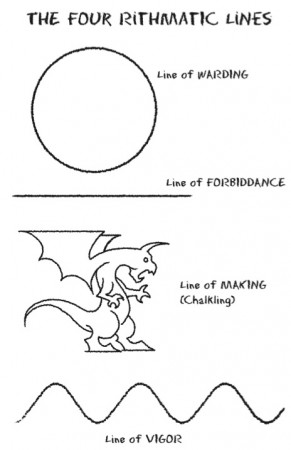
Additional Features: From the beginning of The Rithmatist, diagrams outlining the use of Rithmatics are provided for the reader. Many chapters begin with further diagrams that show different uses of Rithmatics that will appear in the upcoming chapter. These diagrams were absolutely essential to visualizing and understanding Rithmatics. Another added bonus feature is the illustrations interspersed throughout the book, which definitely enriched the reading experience by making some of the writing’s images come to life. 

           What I didn’t like about the book: hardly anything, really. Mostly I just wish it had been longer, or that the sequel was coming out sooner (i.e. yesterday). I personally am a fast reader, insofar as that when I read, I read for hours and hours on end. Because of this, I ended up finishing the book in less than two days. For readers that have less free time on their hands, I’m sure this book will last much longer.

           So do I recommend The Rithmatist? Absolutely! And not just to teenagers—I think adults are every bit as capable of enjoying the suspense, character development, and creativity found in The Rithmatist as the supposed target audience. Really, the only thing that makes this book “Young Adult” fiction is the lack of profanity and adult content. As I said before, I eagerly await the next book in what is supposed to be a trilogy, especially because of the surprising ending! Go forth and read!

 You can buy The Rithmatist here on Amazon.